


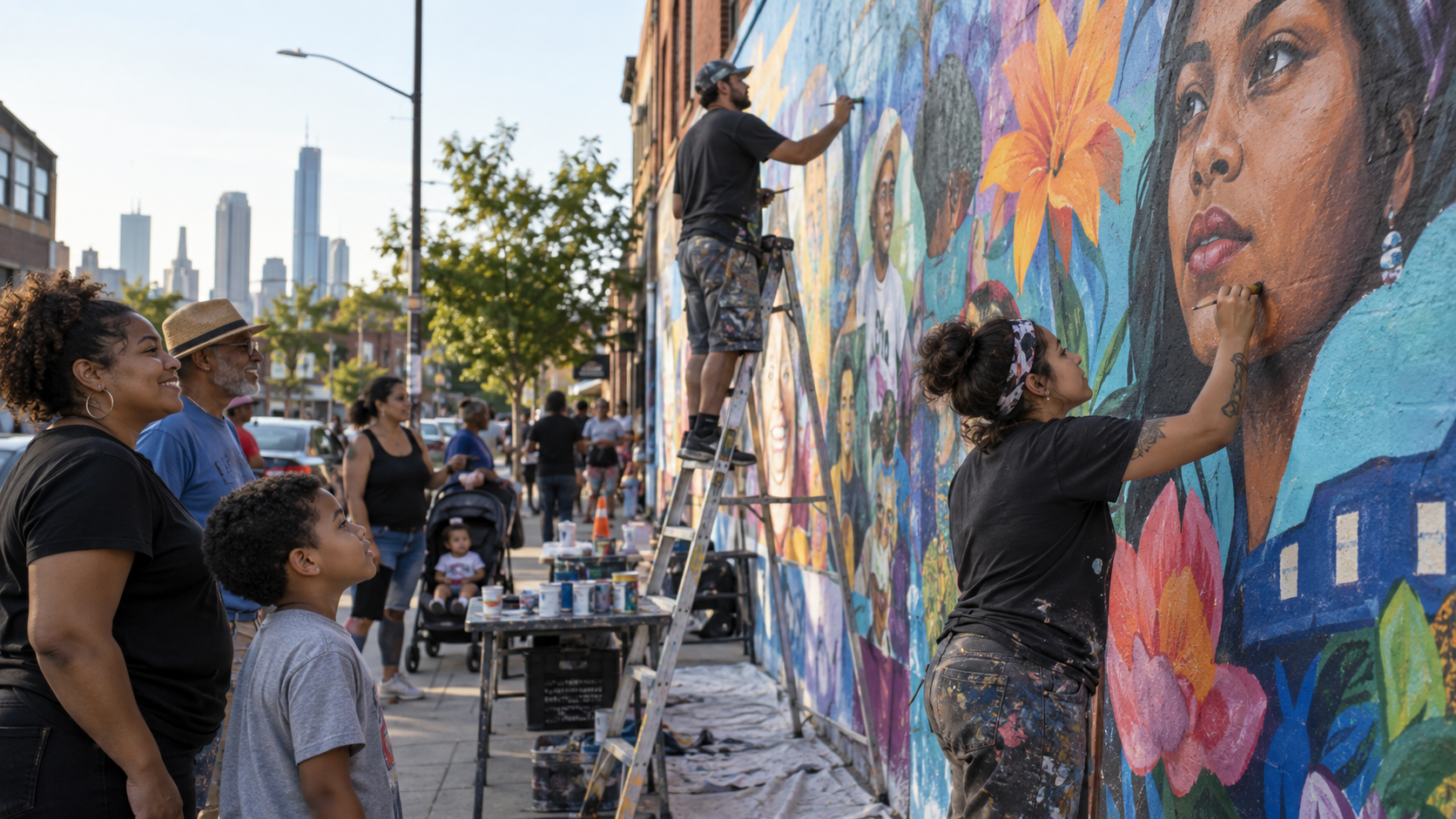
Public art is becoming an important part of neighborhood renewal in cities of every size. Murals, sculptures and temporary installations can turn an ignored wall or empty square into a place people recognize and discuss. The strongest projects do more than decorate a street. They reflect local history, create paid work for artists and encourage residents to take a more active role in shaping the spaces they share.
Creative Work Begins With Local Listening
Successful projects usually start before an artist opens a paint can. Organizers meet shop owners, schools, historians and residents to understand what the area values. These conversations can reveal overlooked stories, from the workers who built a district to newer communities that have brought different languages and traditions. Artists then translate those ideas into a design that feels specific to its location.
That process matters because public art occupies a common space. A work imposed without consultation may look impressive but still feel disconnected from daily life. Community workshops give people a chance to suggest themes, review sketches and sometimes help with production. Participation does not mean every opinion can appear in one image, but it makes the final decisions more transparent.
The economic effect can be visible as well. A distinctive mural attracts visitors, provides a landmark for small businesses and can support walking tours or cultural events. Local suppliers benefit when projects purchase paint, equipment and fabrication services nearby. However, officials should avoid treating art as a quick substitute for essential services such as safe streets, housing and reliable transport.
Maintenance Protects the Original Investment
Outdoor work faces sunlight, rain, pollution and accidental damage. A realistic plan includes surface preparation, protective coatings, cleaning and a budget for repairs. Organizers should also agree on how long a temporary work will remain and what happens if a building changes ownership. Clear documentation prevents conflict later and respects the artist’s contribution.
Public art can also raise difficult questions about whose history is celebrated. Curators need open selection processes and fair payment, especially when projects use stories from underrepresented communities. Inviting several artists and publishing the criteria for selection can build confidence in the result.
When planned carefully, a mural or installation becomes more than a background for photographs. It creates a shared reference point and makes cultural activity visible in ordinary life. The lasting value comes from the relationships formed around the work: residents meeting one another, young people seeing creative careers and neighborhoods gaining a stronger sense of identity without losing their complexity.