








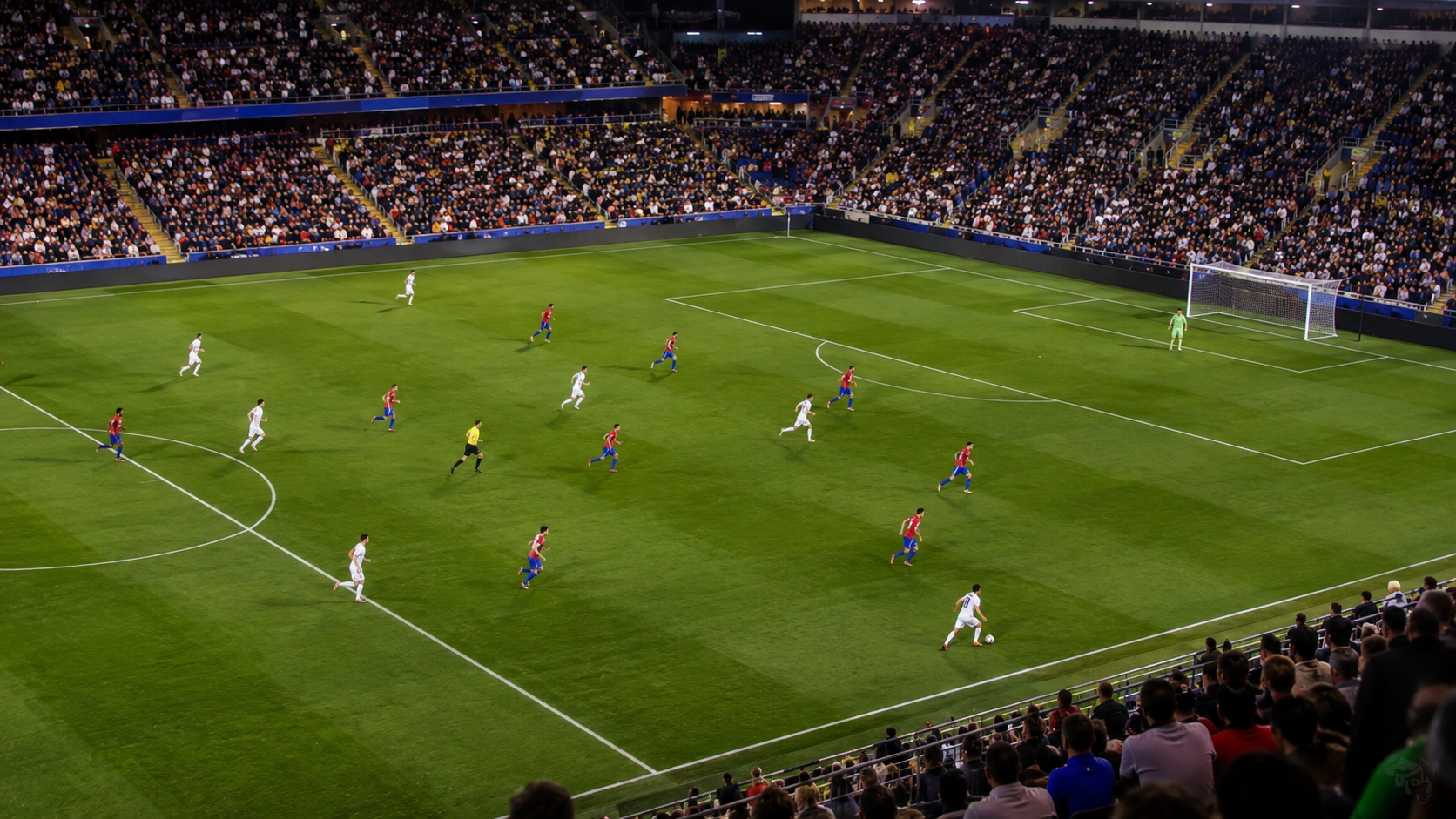
Spanish football has a distinctive ability to turn a match into a contest of patience, intelligence and sudden acceleration. A carefully constructed passing move can be followed by an explosive counterattack, while a team that appears comfortable in possession may find itself under intense pressure after one misplaced pass. In La Liga, the outcome is often shaped by details that develop gradually rather than by isolated moments of brilliance. For supporters who want to follow the complete story of a fixture, смотреть полные матчи чемпионата Испании makes it possible to revisit every phase and understand how the balance between two teams changes over ninety minutes.
A League Built on Contrasting Football Ideas
La Liga is often associated with technical football and intelligent possession, but its character is much broader. The competition brings together clubs with different resources, coaching traditions and tactical priorities. Some teams prefer to build attacks through short combinations, patiently moving the opposition from one side of the pitch to another. Others look for direct routes forward, using speed, physical strength and quick transitions to create danger.
These approaches can meet in fascinating ways. A possession-oriented side may attempt to control the central areas, while its opponent focuses on closing passing lanes and attacking the spaces left behind. The result is not necessarily a simple contest between attack and defence. It becomes a strategic exchange in which both teams constantly adjust their positioning.
This variety is one reason why the complete match matters. A short summary may show the goals and the most dramatic saves, but it rarely explains why one team controlled the opening period or how the other gradually found a way back into the contest. The full recording reveals the decisions, movements and tactical changes that connect those moments.
It also challenges the assumption that every Spanish club follows the same football philosophy. La Liga contains multiple styles, and their interaction gives the competition much of its personality.
How a Match Changes After the Opening Whistle
The opening minutes often reveal the initial intentions of both managers. One team may press high, attempting to force mistakes close to the opponent’s penalty area. Another may remain compact and allow the opposition to have the ball, concentrating instead on protecting the most dangerous spaces.
As the match develops, these initial plans are tested. A pressing system can become less effective if the opposing defenders find ways to play through the first line. A team that begins cautiously may become more ambitious after recognising that its opponent is leaving too much space between midfield and defence.
The scoreline also influences the tactical balance. A side that takes an early lead may reduce its attacking risks, while the team chasing the game begins to move more players forward. This creates additional space, but it also increases the possibility of conceding another goal on the counterattack.
Watching the complete ninety minutes makes these developments easier to understand. Instead of seeing a formation as something fixed, viewers can observe how it changes according to the situation. A midfielder may drop deeper to help the defence, a full-back may advance into an attacking position, or a forward may move towards the wing to create space for a teammate.
These adjustments are not always dramatic, but they can gradually transform the entire contest.
The Space Between the Lines
One of the most important tactical battles in modern football takes place in the spaces between the defensive and midfield lines. These areas can be difficult to protect because players must decide whether to follow an opponent, maintain their position or move forward to challenge for the ball.
Attacking midfielders often try to receive passes in these pockets of space. If they can turn towards the goal, they may create an opportunity to pass through the defensive line or combine with a forward. If the defender closes them down quickly, the attack may be forced backwards or towards the touchline.
The quality of these movements is particularly interesting in Spanish football, where technical ability is frequently combined with positional awareness. A player does not always need to dribble past an opponent to create an advantage. Sometimes a change of direction, a short movement away from a defender or a well-timed pass is enough to open a route towards goal.
The full match reveals how these spaces are created and closed. It also shows which players consistently recognise them and how defensive units communicate when opponents attempt to exploit them.
For viewers interested in tactical analysis, this can be one of the most rewarding aspects of watching a complete game. The decisive pass may last only a second, but the conditions that make it possible are often created through several coordinated movements.
The Defensive Work That Rarely Receives Attention
Football coverage naturally focuses on goals, assists and spectacular attacking performances. Yet the defensive side of the game often determines whether those moments become possible.
A defender must constantly assess distances, anticipate passes and decide when to step forward. A midfielder may need to cover a teammate who has moved into an attacking position. A winger can contribute by tracking an opposing full-back and preventing an overload on the flank.
These actions rarely appear in short highlight compilations. However, they influence the structure of the match from beginning to end.
A full recording makes it possible to recognise the value of a disciplined defensive performance. Viewers can observe how a back line maintains its shape, how players respond after losing possession and how a team protects the space around its penalty area.
Defending is not simply about clearing the ball or making tackles. It involves anticipation, communication and the ability to move collectively. One player may force an opponent towards the sideline, while another closes the passing option inside. A third defender adjusts his position to protect the space behind them.
When these movements are coordinated, the team can neutralise dangerous attacks without needing a dramatic last-minute intervention.
The Importance of Tempo and Patience
A football match does not maintain the same speed throughout its duration. Even teams known for attacking intensity must recognise when to accelerate and when to slow the game down.
Possession can be used to create pressure, but it can also serve as a way to regain control after a difficult spell. Several accurate passes may allow a team to move its defensive line forward, bring midfielders into better positions and reduce the opponent’s ability to counterattack.
At other times, a quick forward pass is more effective than another sequence of short combinations. If the opposing defence is not organised, speed can become a decisive advantage.
This balance between patience and acceleration is one of the qualities that makes La Liga interesting to study. The best attacking teams are not necessarily those that move the ball quickly on every occasion. They are often the ones that recognise when a situation requires speed and when it demands greater control.
A complete match shows how players make these decisions under pressure. It reveals whether a team can maintain composure after losing possession, whether it becomes predictable in attack and how effectively it responds to changes in the opponent’s defensive structure.
Substitutions as Tactical Turning Points
The introduction of a substitute can alter more than the energy of a team. It may change the entire shape of an attack or create a new defensive responsibility.
A manager might introduce a faster winger to challenge a tired full-back. A more physically powerful forward can offer a different option when a team needs to attack crosses. A midfielder with strong defensive instincts may be brought on to protect a narrow advantage during the final stages.
The effect of a substitution depends on how the player fits into the existing system. A new attacker may require the full-back behind him to remain deeper. A change in midfield can allow another player to move closer to the penalty area. Even a substitution that appears defensive can create opportunities for counterattacks by giving the team a more reliable way to recover and distribute possession.
These changes are especially revealing when viewed in context. A short summary may show that a substitute scored or assisted a goal, but the complete match explains how his arrival altered the movement of the team and why the opposition struggled to respond.
Technology and the New Language of Match Analysis
Technology has changed the way professional football is prepared, played and examined. Clubs increasingly rely on video analysis, positional tracking and performance data to understand how players move and how teams use space. Coaches can review pressing sequences, defensive distances, passing options and transitions between attack and defence.
These tools help turn the match into a detailed source of information. Instead of judging a performance only by goals or possession percentages, analysts can study how often a team progresses into dangerous areas, how effectively it recovers the ball and whether its defensive structure remains organised.
Technology also influences the viewing experience. Modern broadcasts offer multiple camera angles, slow-motion replays and additional match information. Video review systems provide officials with tools to reassess certain incidents, while digital platforms allow supporters to revisit important passages and study them more carefully.
For viewers interested in La Liga, these developments make recorded matches especially valuable. The ability to pause, rewind and examine a particular sequence encourages a more analytical relationship with football. Technology cannot replace the emotion of the stadium, but it can help explain the complex decisions that shape the action.
Clubs, Cities and the Emotional Geography of La Liga
Spanish football is also deeply connected to the places where its clubs developed. A team’s identity can reflect the history of a city, the traditions of a region and the relationship between generations of supporters.
This cultural dimension gives many fixtures a significance that extends beyond the league table. Local rivalries can carry decades of memories, while meetings between established clubs and ambitious newcomers reveal different sporting ambitions. Supporters bring their own expectations to each match, creating an atmosphere that influences how the occasion is experienced.
The stadium is where these elements become visible. Crowd reactions can intensify after a successful tackle, a missed opportunity or a controversial decision. A goal in the final minutes may transform an entire evening, while a determined defensive performance can receive an equally passionate response.
Watching a full match preserves more of this atmosphere than a short collection of highlights. The pauses, the tension and the changing mood of the crowd are all part of the story.
Why the Complete Performance Deserves Attention
The final score is the simplest way to describe a football match, but it is not always the most revealing. Two teams may finish with the same number of goals despite having very different performances. One may dominate possession without creating enough clear chances, while the other uses its opportunities with remarkable efficiency.
The complete match provides the context needed to understand these differences. It allows viewers to follow the development of tactics, recognise individual contributions and see how a contest changes when players become tired or managers introduce new ideas.
La Liga rewards this kind of attention. Its technical quality is visible in individual touches, but its deeper appeal lies in the relationships between players, the use of space and the ability to adapt under pressure.
For supporters who want to understand more than the decisive incidents, full-match viewing offers a richer connection with Spanish football. Every movement contributes to the final picture, and every phase can reveal something about the teams involved. The most memorable moment may decide the result, but the ninety minutes explain how the story was written.